
Work Breakdown Structure
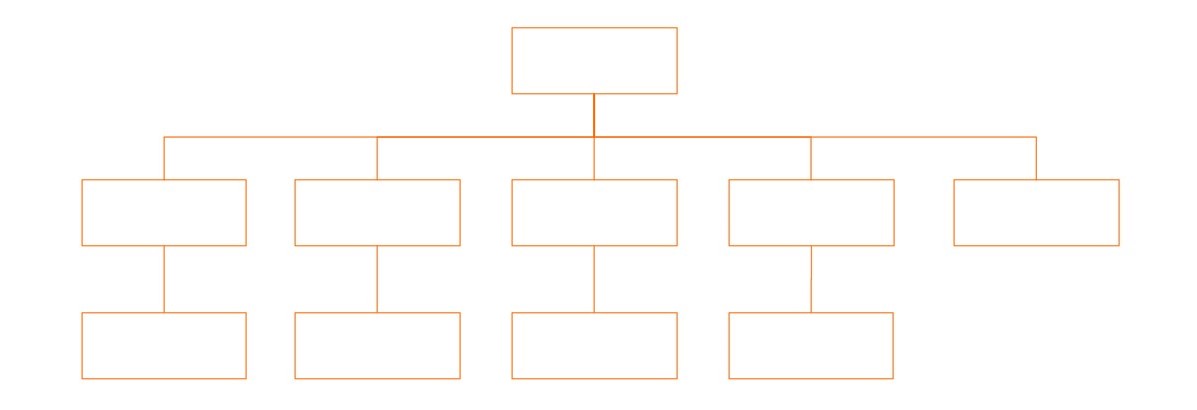
According to the PMBOK Guide, a work breakdown structure is a deliverable-oriented hierarchical decomposition of the work to be carried out by the project team.
Simply put, a work breakdown structure is a visual, hierarchical breakdown of a project into smaller components.
It is the foundation of project planning. It helps identify every project component, estimate costs and develop an accurate schedule. It integrates the project scope, schedule and cost baseline, ensuring that all project plans are aligned.
A work breakdown structure may have two or three levels of detail. Complex projects may require more levels.
Types of Work Breakdown Structure
The following two WBS types are the most common in project management:
- Deliverable-Based WBS
- Phase-Based WBS
Deliverable-Based Work Breakdown Structure
A deliverable-based WBS breaks down the project by deliverables, such as products, services or results.
The following is an example of a deliverable-based WBS:
| WBS Code | Work Area | Lower-Level Work |
|---|---|---|
| 1.1 | Site preparation | 1.2 Site cleanup 1.3 Boundary wall construction |
| 2.1 | Resource procurement | 2.2 Cost estimation 2.3 Purchase materials and equipment 2.4 Recruit the workforce |
| 3.1 | House construction | 3.1.1 Foundation construction 3.1.2 Structural construction 3.1.3 Painting and plumbing |
| 4.1 | Cleanup | 4.2 Debris removal |
| 5.0 | Handover | Deliver the completed house |
Phase-Based Work Breakdown Structure
Projects are often divided into phases to improve management. In these cases, the work breakdown structure is phase-based.
The final deliverable remains at the top, while the next level shows five project management phases: initiation, planning, execution, monitoring and controlling, and closing.
The following is an example of a phase-based WBS:
| Phase | Activities |
|---|---|
| 1.0 Initiation | 1.1 Develop the basic plan 1.1.1 Assign the project leader |
| 2.0 Organization | 2.1 Define the scope 2.2 Develop the schedule 2.3 Estimate costs |
| 3.0 Implementation and Verification | 3.1 Implementation 3.2 Control |
| 4.0 Closure | 4.1 Product handover 4.2 Release the team |
Besides these two types, you may also encounter the following less common WBS structures:
Noun-Oriented WBS: Also known as a product breakdown structure, it divides the project into product components.
Verb-Oriented WBS: This task-oriented WBS defines deliverables through the actions taken to produce them.
Time-Phased WBS: This structure is used for longer projects. It divides the project into phases and uses rolling wave planning to develop detailed plans for the near-term phase.
Other less common WBS types include:
- Geographic Structure
- Cost Breakdown
- Profit Center Structure
WBS Elements
A WBS consists of:
- Work Packages
- Planning Packages
- Control Accounts
Work Packages: These are the lowest-level elements in each WBS branch. Work packages include details about the deliverable owner, duration, milestones, resources and risks.
Planning Packages: A planning package is a different form of work package. Once the project management plan is approved, its scope is defined. Planning packages describe the work before it is planned in detail. With those details, they become work packages.
Control Accounts: Control accounts let you collect, analyze and report data for elements within the work breakdown structure, supporting reporting and monitoring.
Every WBS element should include the following four items:
- The scope of work, including deliverables.
- Start and finish dates and duration.
- The budget.
- The name of the person responsible.
How to Develop a Work Breakdown Structure
A work breakdown structure includes all project work. Developing a WBS is an iterative process that is repeated when new information becomes available or the scope changes.
The following are the key steps for developing a work breakdown structure:
#1. Gather All Information and Data
You must understand the scope of work and project stakeholders’ requirements. This is a vital step, during which you will refer to the project charter, contract documents and project plan.
Collect all project information and data: missing information can leave your WBS incomplete.
#2. Define the WBS Type, Levels and Elements
After clarifying the scope of work, decide which WBS type to create and identify the main project deliverables.
Define the WBS levels. A WBS typically has two or three levels, but larger projects may require more.
Capture 100% of the scope, with each level covering the full scope of work it represents.
#3. Decompose the WBS Elements
Determine the work packages at the bottom of your WBS hierarchy. Each work package should be definable, independent, estimable, manageable, integrable and measurable. Use nouns or adjectives to describe it.
Decide whether the WBS will be based on deliverables or phases.
Break the project scope down into level-one deliverables. Ensure that every WBS element is unique. Then decompose level-one elements into levels two and three, giving each unique subelement a unique identifier.
Stop when further decomposition is no longer practical. The lowest-level WBS elements are called work packages.
You now have your work breakdown structure.
The scope of two different WBS elements at the same level should not overlap. Clarify any ambiguous names in the WBS dictionary.
#4. Create the WBS Dictionary
A WBS is incomplete without a WBS dictionary.
Create the WBS dictionary alongside the WBS. It describes and defines the scope of every element, helping the project team understand each work package.
A WBS dictionary may include the work package name, risks, assumptions, constraints, identifier, description, assigned team member, estimated cost, duration and due date.
#5. Develop the Project Schedule
To develop the project schedule, break work packages into activities and schedule them. The schedule may use a Gantt chart or network diagrams, such as the critical path method, PERT or the critical chain method.
The WBS 100% Rule
This is the most important WBS principle: the WBS must include 100% of the project work and capture all internal, external and interim deliverables. The rule applies at every level: the sum of the work at the lower level must equal 100% of the work represented at its parent level.
The rule also applies at the activity level. The work represented by the activities within a work package must equal the work represented by that package.
Uses of the Work Breakdown Structure
A WBS divides the project scope into manageable components, making it easier to plan, manage and deliver.
The WBS is a useful project management planning tool that clarifies the scope of work. It helps estimate project costs, develop schedules, and monitor and control project work.
Importance of the Work Breakdown Structure
The WBS is important in project management. It clarifies the scope, helps identify activities and dependencies, prevents duplicate work, determines task duration and supports budget calculations for each work package.
A strong work breakdown structure helps prevent problems such as scope creep, gold plating, cost overruns and schedule delays.
A WBS gives you comprehensive control over your project.
Advantages of the WBS
The WBS offers many benefits in project management:
- It is the basis for scheduling and cost estimation. You will know all project deliverables and their dependencies.
- Because WBS work packages are independent, you can assign them to different team members. This increases responsibility and accountability.
- It prevents duplicate tasks and scope creep by clarifying the scope of work. There will be fewer disputes and a smoother workflow.
Disadvantages of the Work Breakdown Structure
Although the WBS has many advantages, it also has some disadvantages.
- Some people may find it difficult to develop a hierarchical work breakdown structure, which adds to their workload.
- WBS development requires experience and time. If team members lack experience or skills, some work may be omitted.
- Developing a WBS requires a complete, detailed scope of work. These details are often unavailable at the start of a project, making development difficult.
- On larger projects, work may be duplicated if the WBS is not properly controlled.
- Once the project schedule is developed, attention shifts to it, and the WBS is often not updated.
Work Breakdown Structure Best Practices
- Ensure that every WBS level represents 100% of the scope of work. Under the 100% rule, all child-level work must equal 100% of the parent-level work.
- Ensure that all WBS elements are mutually exclusive. No two elements should share the same scope of work.
- Do not decompose too deeply. Two or three levels are generally enough, though larger projects may require more. Excessive detail makes the structure complex and confusing.
Work Breakdown Structure Examples
A WBS can take different forms. It need not be a chart: it may be graphical, tabular or developed in Excel. Choose the form that suits your project.
The following are examples of work breakdown structures.
WBS Flowchart: This is the most common WBS example: a hierarchical diagram.
WBS Excel Sheet: Here, you design the WBS in a spreadsheet using columns and rows.
WBS Gantt Chart: This is another commonly used WBS structure.
WBS List: Here, you list the WBS elements in a Word document. This structure is easy to create.
Characteristics of a Work Breakdown Structure
A WBS has the following characteristics:
- It is a deliverable-based or phase-based hierarchical structure of the full scope of work.
- It contains 100% of the scope of work.
- It communicates the scope of work to project stakeholders.
- It may be graphical, tabular or a list.
- It has at least two levels of detail.
- It uses a numbering system to identify elements and work packages.
Work Breakdown Structure vs. Project Schedule
Many beginners confuse the WBS with the project schedule. They are different and serve different purposes.
A work breakdown structure clarifies the scope and explains what the project must deliver. You will know exactly what must be completed to finish the project.
The project schedule, on the other hand, provides the detailed activities required to complete the project. It shows activities, durations, milestones and the critical path.
The WBS is the foundation of the project schedule because it provides work packages. From them, you identify activities, assign resources and durations, establish relationships, build a network diagram and develop the schedule.
Conclusion
A work breakdown structure is one of the first documents you create after the project charter. Once the WBS is ready, you develop the project schedule.
The WBS supports schedule development by presenting all work needed to complete the project in an organized format.
You can visualize project work, estimate costs and durations, assign resources and see dependencies between tasks.
References:
- PMBOK Guide, 6th Edition.
- CONOCER Competency Standard EC0935, “Managing Work Through Projects.”
- Fahad Usmani, PM Study Circle.

Thank you for the information; it is very important.